
Function Introduction
The Co-Signer feature of Keysecure is a key security measure used to enhance the security and credibility of transactions. This article will detail the functions of the Co-Signer and its configuration methods to help you meet business requirements and provide a safer, more transparent, and efficient digital experience.Operation Procedure
1
Preparations Before Development
- Create MPC workspace and wallets
- Prepare public and private keys, IP of the third-party application server and Co-Signer server, receiving and transfer callback notification address, domain name of the Co-Signer server
2
Log in to the Web Page
Choose the workspace to configure the Co-Signer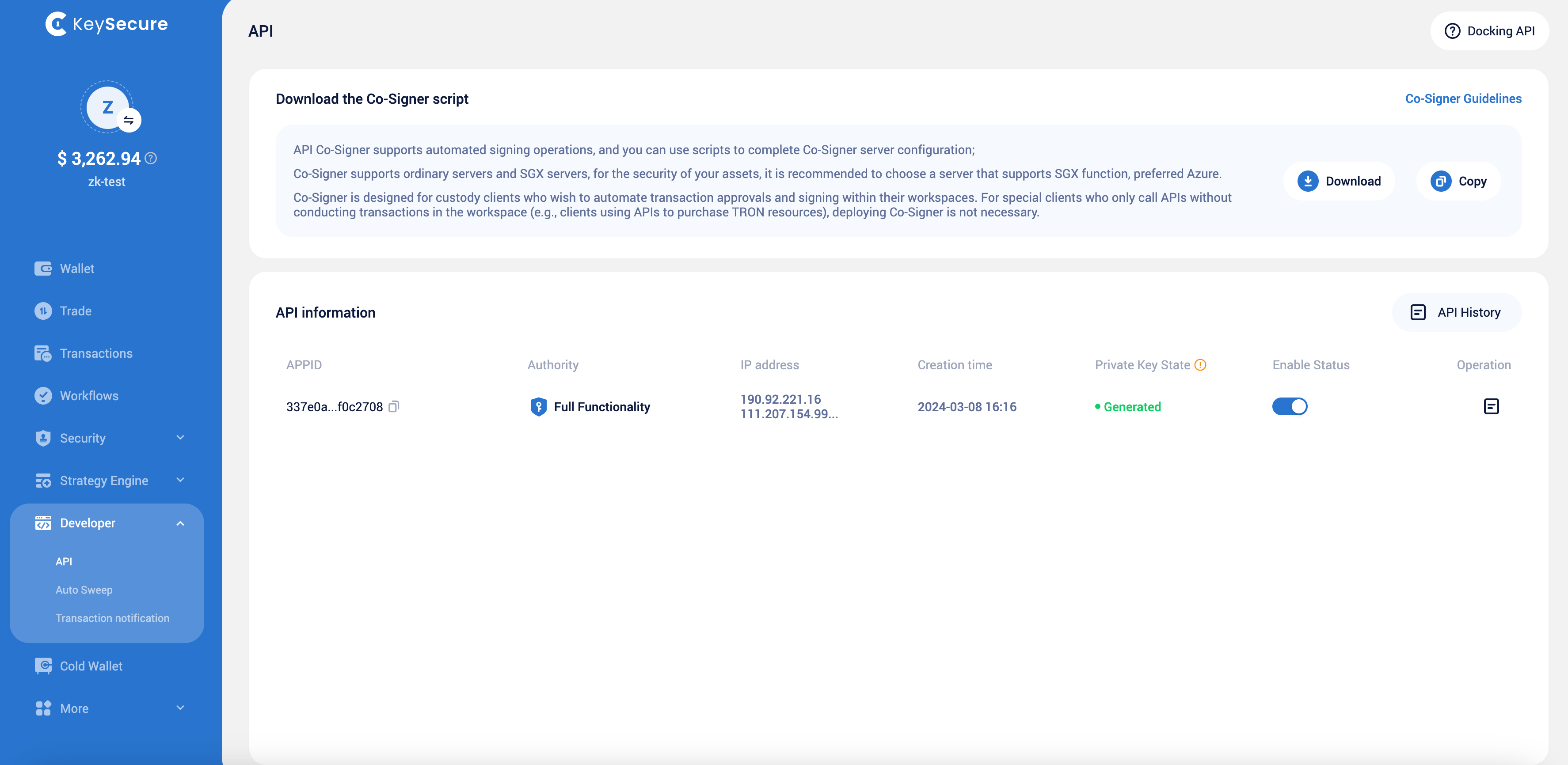
3
API Management
Choose the [API Management] page in the side navigation of the workspace panel, and fill in the information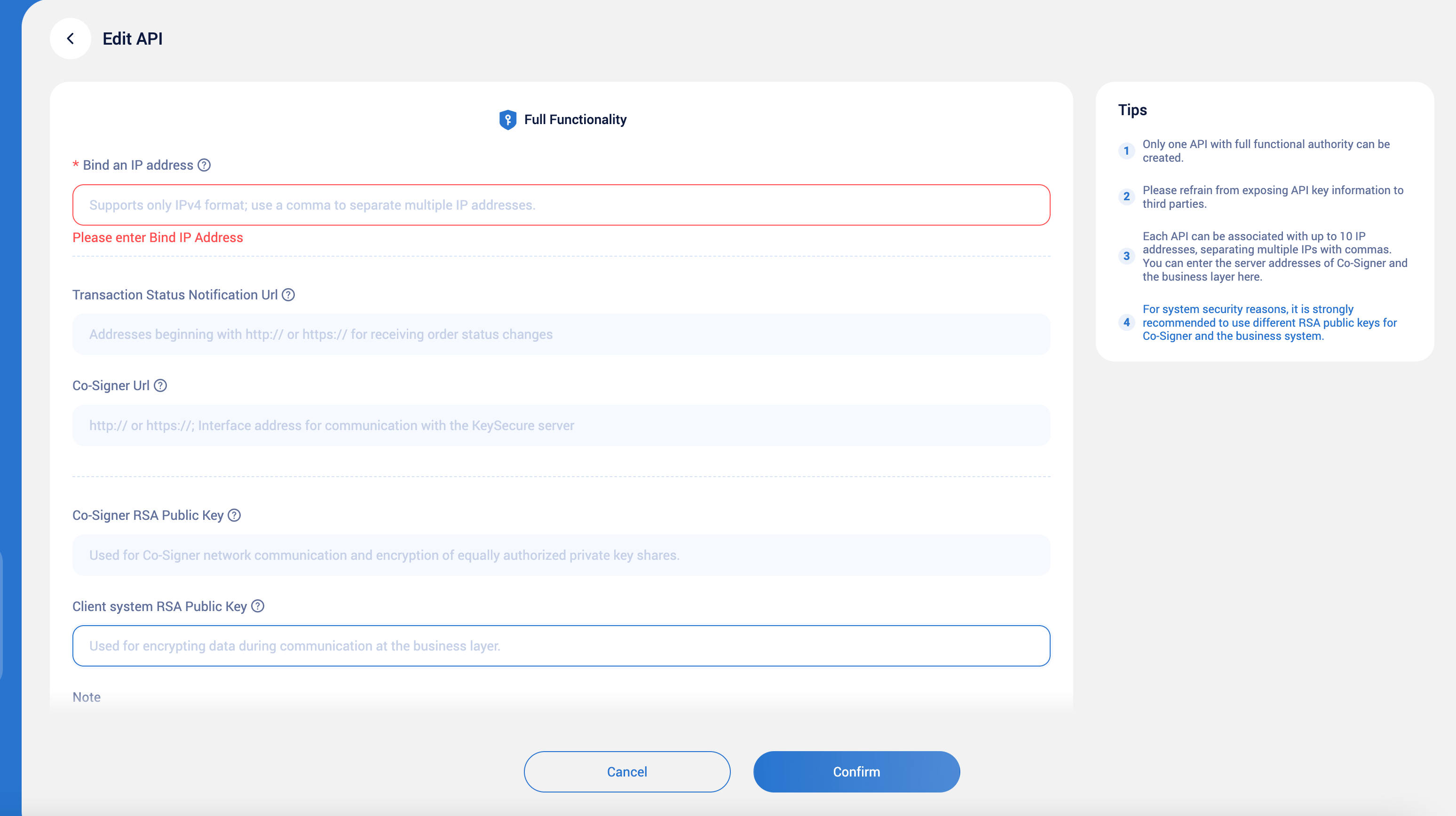
4
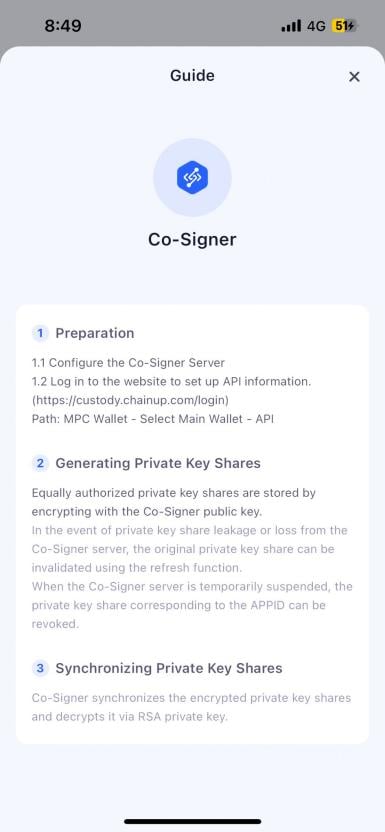
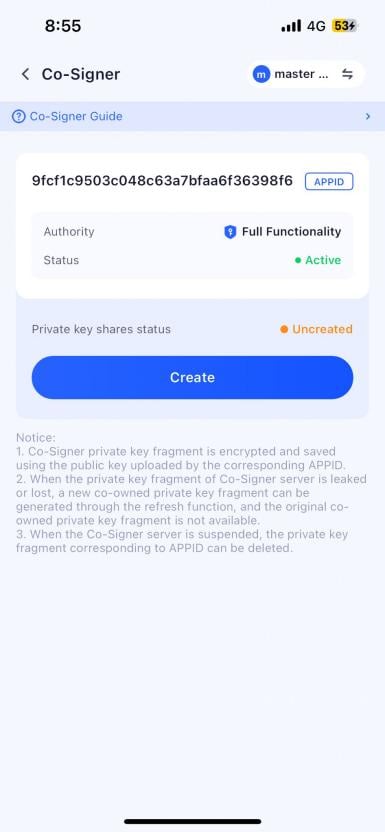
Create Private Key Share
After the web page configuration is completed, you need to log in to the APP to create a private key share for the API
5
Log in to the APP for Configuration
Log in to the APP, and choose Co-Signer to start configuration after entering the security page.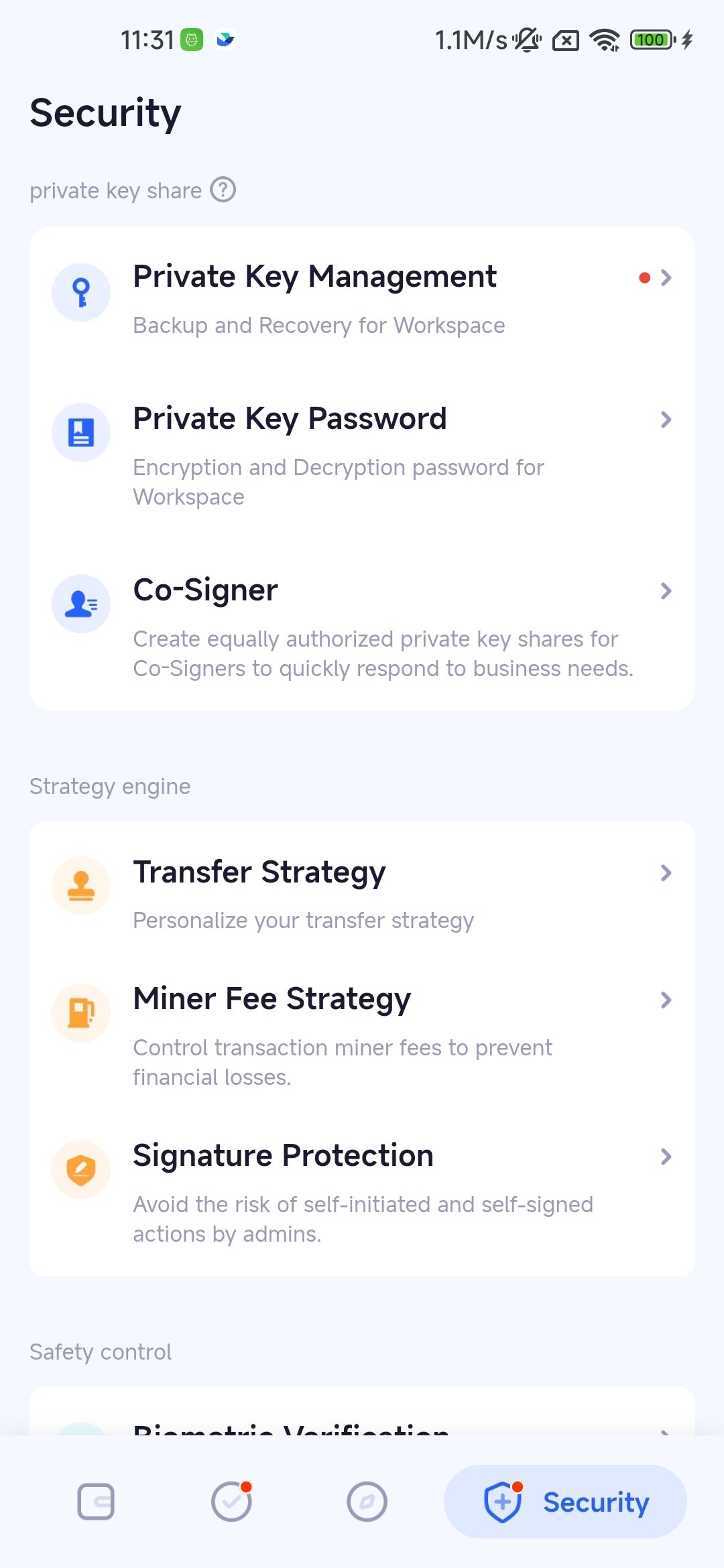
Frequently Asked Questions
What is a Co-Signer?
What is a Co-Signer?
In the field of blockchain or digital assets, a
"Co-Signer" usually refers to a mechanism where multiple individuals or entities need to jointly sign a transaction or contract. This mechanism is mainly used to enhance the security and credibility of the transaction or contract. The purpose of using a Co-Signer is to ensure that when it comes to key operations, multiple parties’ confirmation and authorization are required, thereby reducing potential risks and increasing overall security. This is especially important for high-value transactions or key business operations in digital assets and blockchain networks.What does a Co-Signer do?
What does a Co-Signer do?
A Co-Signer plays an important role in the following aspects:
- Secure Digital Asset Management: The Co-Signer is used to protect high-value digital assets. Multisignature wallets ensure that private keys are distributed in different places to prevent a single private key from being leaked or misused.
- Smart Contract Operations: For smart contracts that require confirmation from multiple parties, the Co-Signer provides a secure mechanism.
- Transaction Security: For transactions on the blockchain, especially those involving large amounts of funds, multisignature enhances the security of the transaction.
- Enterprise-level Applications: In enterprise-level blockchain applications, the Co-Signer is used to ensure that multiple authorized entities must agree to a specific decision or transaction.